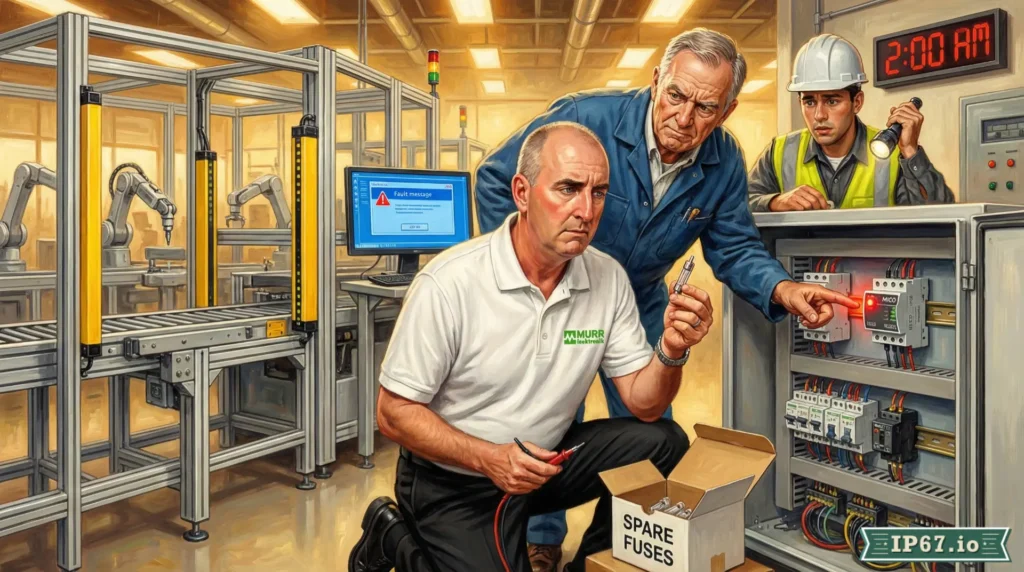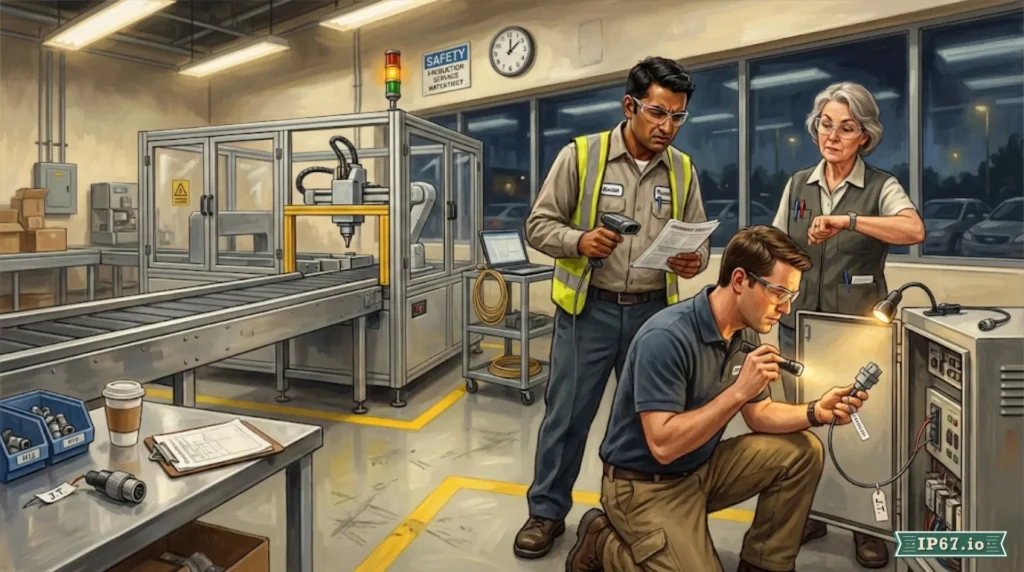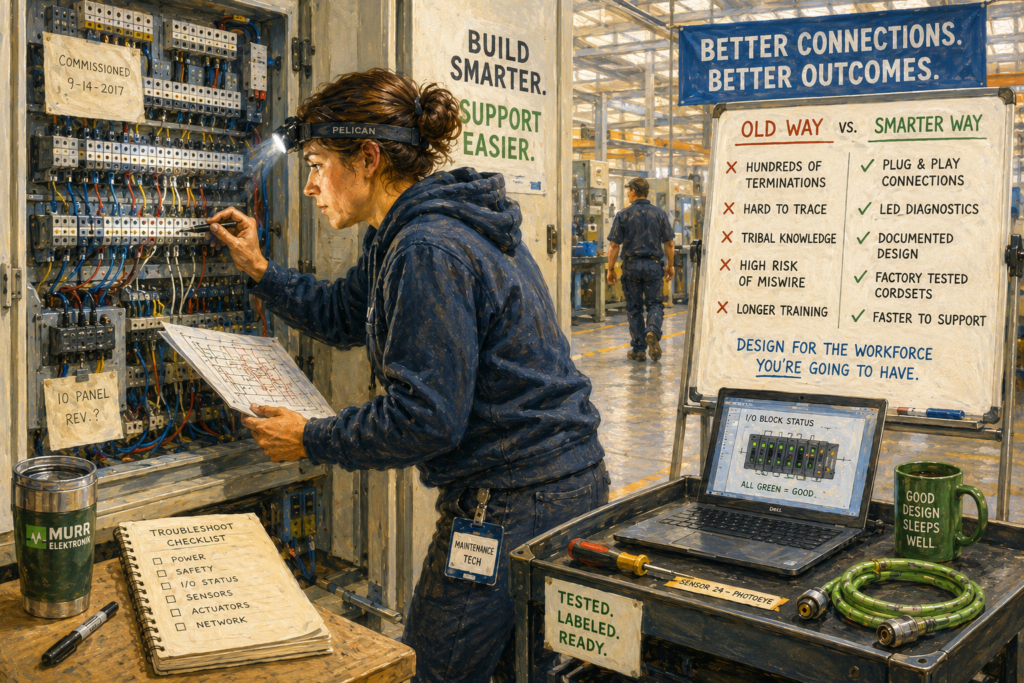
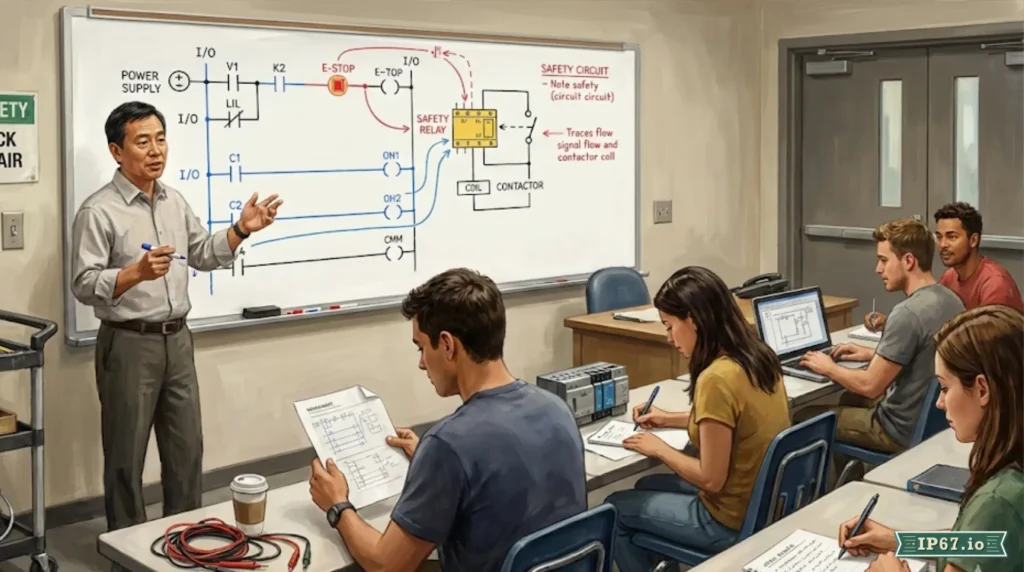
Picture this: You’re on the plant floor, watching your brand-new, multi-million dollar packaging line running like clockwork. Everything’s humming, everything’s dialed in just right – it’s a beautiful thing. Then your most experienced maintenance technician walks up and announces that they’re retiring. Just like that, the thought hits you – the same one that keeps many other manufacturing leaders up at night. There’s no one lined up to take their place.
We’re heading straight into a perfect storm. The seasoned pros – Boomers and now even Gen X – are retiring faster than we can replace them. And the generations coming up next? Most never got the chance to connect with the thing that built our entire industrial economy in the first place: learning to work with their hands.
The iPad Generation Meets Industrial Reality
Here’s the reality that very few want to discuss at industry conferences and trade shows: Millennials and Gen Z are the first generations in modern history who didn’t get shop class as standard curriculum. While previous generations learned to use lathes, drill presses, and hand tools, these young adults were handed iPads and told that degrees and PhDs would give them the best futures.
And while that shift helped build a generation of digital natives, it came at a cost. Because when you remove hands-on learning from the equation, you don’t just lose tool skills, you lose context. You lose the chance to connect how things actually work to how they’re supposed to work.
Digital literacy matters enormously in today’s smart factories. But we’ve created a generation that can troubleshoot software bugs while being completely mystified by a simple mechanical coupling failure. They can code a PLC program (most likely preferring structured text over ladder) but struggle to understand why proper torque specifications matter when installing a gearbox on a servo motor.
This isn’t about intelligence – it’s about exposure. You can’t develop an interest in something you’ve never experienced.
The Skills Gap Reality Check
The numbers tell a sobering story. The Manufacturing Institute predicts we’ll have 2.1 million unfilled manufacturing jobs by 2030. But here’s what those statistics don’t capture: it’s not just about quantity, it’s about foundational understanding.
Today’s industrial machinery doesn’t just need operators – it needs technicians who understand mechanical systems, electrical circuits, pneumatics, and increasingly complex communication networks. These are professionals who need to think both systematically and practically, combining digital troubleshooting skills with hands-on mechanical intuition.
When a servo motor starts hunting on your form-fill-seal machine, you need someone who understands both the software parameters and the mechanical load characteristics. That kind of systems thinking doesn’t develop overnight – it builds from years of hands-on experience with how things actually work.
What We Lost When Shop Class Disappeared
Shop class wasn’t just about learning to use tools – it was about developing problem-solving skills that translate directly to industrial environments. Students learned to measure twice and cut once, to understand material properties, and to troubleshoot when things didn’t work as expected.
More importantly, shop class was where many future technicians first discovered they had an aptitude for working with their hands. It’s where the kid who struggled with algebra suddenly excelled when learning about gear ratios in a practical context. It’s where spatial reasoning skills developed naturally through hands-on projects.
We’ve essentially eliminated the discovery mechanism for identifying future skilled trades workers. Instead of exposing students to both academic and practical learning paths, we’ve funneled everyone toward college or university tracks, assuming that’s the only route to career success.
The Innovation Paradox
Here’s the irony that should concern all manufacturing leaders: our machines and automated assembly lines have never been more innovative, yet we’re struggling to find people who can implement and maintain these marvels of innovation. We’re building incredibly sophisticated automated systems with AI-driven quality control, predictive maintenance algorithms, and Industry 4.0 connectivity – then wondering why we can’t find technicians who understand how to properly maintain the basic electrical and mechanical components these systems depend on.
Advanced manufacturing requires people who can bridge the digital and physical worlds. You need technicians who are comfortable with both HMI troubleshooting and bearing replacement, who understand both network protocols and pneumatic logic.
Beyond Nostalgia: Practical Solutions
Bringing back shop class isn’t about nostalgia – it’s about economic necessity. But it needs to reflect today’s industrial reality. Modern shop classes should integrate traditional hands-on skills with current technology. Students should learn to use both conventional machining and CNC equipment, understand both relay logic and PLC programming, work with both pneumatic systems and servo controls.
The goal isn’t to turn every student into a machinist, but to give them exposure to hands-on problem-solving and help them discover whether they have both interest and aptitude for technical careers. Some will discover they love the challenge of mechanical troubleshooting. Others might realize they prefer design engineering but now understand manufacturing constraints. Both outcomes benefit our industry.
Industry’s Role in the Solution
We can’t wait for educational systems to solve this alone. Progressive manufacturers are already creating their own solutions through partnerships with local schools, offering facility tours, providing guest speakers, and supporting hands-on STEM programs.
Some companies are taking it a step further, creating apprenticeship programs that combine classroom learning with hands-on experience. These programs often produce more job-ready graduates than traditional four-year programs, with the added benefit of developing company loyalty.
The packaging industry, in particular, needs to tell its story better. Young people don’t realize that the products they use every day – from their morning coffee pods to their Amazon deliveries – depend on sophisticated machinery that requires skilled technicians to operate and maintain.
The Competitive Advantage
Companies that address the skilled technician shortage will have a significant competitive advantage. They’ll have lower turnover, better equipment reliability, and faster innovation cycles. More importantly, they’ll be positioned for growth while competitors struggle with workforce limitations.
This isn’t just about filling current openings – it’s about building the foundation for future manufacturing competitiveness. The companies and countries that maintain strong technical education pipelines will dominate advanced manufacturing in the coming decades.
Time for Action
The solution starts with recognition: hands-on skills aren’t obsolete in our digital age – they’re more critical than ever. We need educational systems that value both intellectual and practical intelligence, that recognize career pathways beyond college degrees, and that prepare students for the reality of modern manufacturing.
Every machine builder and manufacturing executive reading this has a role to play. Support local technical education programs. Advocate for practical learning opportunities. Share your industry knowledge with educators and students. Help young people understand that skilled trades offer both financial security and intellectual challenge.
The next generation is ready to work – we just need to give them the chance to discover whether they prefer working with their hands, their minds, or ideally, both. The future of manufacturing depends on it.
The time for action is now. The technicians we need tomorrow should be discovering their passion for hands-on problem-solving today.